Visit the Beatles London Homes
Discover where The Beatles lived in London, including homes of John, Paul, George, Ringo and manager Brian Epstein, with addresses and history.

Where The Beatles Lived in London: A Guide to the Homes of John, Paul, George, Ringo and Brian Epstein
London was the city where The Beatles became global superstars. Although Liverpool was their birthplace and musical home, it was London that became the centre of their professional and personal lives during the height of Beatlemania. Between the early 1960s and the group’s breakup, all four Beatles lived at various addresses across the capital, from modest flats to grand mansions. Their manager, Brian Epstein, also established a London home close to the heart of the music industry.

For Beatles fans visiting London today, many of these addresses can still be seen from the street, offering a fascinating glimpse into the lives of the world’s most famous band.
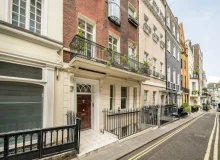
Ringo Starr and John Lennon – 34 Montagu Square, Marylebone

Ringo Starr leased the ground-floor and basement flat at 34 Montagu Square in early 1965, shortly after marrying Maureen. Although the couple lived there for only about six months before moving to Weybridge, Ringo kept the lease, and the apartment became one of the most famous addresses in rock history.
Among its notable residents was Jimi Hendrix, who stayed there in late 1966 with his manager, Chas Chandler. During his time at the flat, Hendrix finished writing The Wind Cries Mary, although his stay ended after an LSD-fuelled incident involving a tin of white paint and the apartment’s silk wallpaper. Paul McCartney later used the flat as a writing retreat and makeshift recording studio, working on songs including Eleanor Rigby and recording material for Apple’s experimental Zapple label.
In 1968, John Lennon and Yoko Ono moved in, photographed the cover of Two Virgins there, and were later involved in a drugs case that led to Ringo selling the lease in 1969. Today, a blue plaque marks John Lennon’s stay, but makes no mention of Ringo.
Address: 34 Montagu Square, London W1H 2LJ
Paul McCartney – 57 Wimpole Street, Marylebone
Paul McCartney lived in a handsome Georgian townhouse on Wimpole Street in Marylebone from late 1963 until 1966, during the early height of Beatlemania. The house belonged to his girlfriend at the time, actress Jane Asher, whose family was both cultured and musically inclined. Her father was a well-known doctor, and her mother, Margaret Asher, was a professional musician and music teacher who even taught George Martin before he became the Beatles’ legendary producer.

Paul stayed in a small attic room at the top of the house. It was here that he famously dreamed the melody for Yesterday. There was a piano in the room, and when he woke up he immediately played the tune to hold onto it, initially unsure whether he had accidentally copied it from somewhere. For months he jokingly called it Scrambled Eggs while he worked on proper lyrics. Margaret Asher even used the tune as a teaching exercise for her students long before it was ever recorded.
Down in the basement music room, Paul and John Lennon often worked together. Some of their most important early songs were written there, including I Want to Hold Your Hand, and later material from Help!, Rubber Soul and Revolver, such as Eleanor Rigby and And I Love Her. That piano from the house is now displayed at the Rock & Roll Hall of Fame in Cleveland.
Life at Wimpole Street also shaped Paul personally. Jane Asher had a busy acting career and was often away, while Paul’s background was more traditional and working-class. Their differing expectations, combined with the pressures of fame and Paul’s restless personal life, fed into several of his “Jane-inspired” songs like I’m Looking Through You, You Won’t See Me, and We Can Work It Out.
Jane’s brother, Peter Asher, also lived in the house and later became an important figure in music himself. Paul wrote World Without Love for Peter’s duo Peter and Gordon, and Peter would go on to become a major producer and manager for artists like James Taylor and Linda Ronstadt.
The Asher household was deeply artistic, exposing Paul to classical music, theatre, and avant-garde ideas that would quietly influence the Beatles’ later work. Fans soon discovered where he lived, and the street was regularly watched. To help him escape, a discreet exit route was arranged through the back of the house and neighbouring gardens.

Paul eventually left Wimpole Street in 1966 after buying his own home on Cavendish Avenue near Abbey Road. He and Jane Asher ended their relationship in 1968.
Address: 57 Wimpole Street, London W1G 8YP
Paul McCartney – 7 Cavendish Avenue, St John’s Wood
Perhaps the most famous Beatles home still standing in London is Paul’s house at 7 Cavendish Avenue.
Purchased in 1965, it is the only London home owned by a Beatle that remains in the possession of the same Beatle today. Located just a short walk from Abbey Road Studios, the property became McCartney’s long-term London base.
Many Beatles associates visited the house over the years, and parts of Paul’s post-Beatles career were managed from the property. Fans often gather outside the distinctive blue gates for photographs.
Address: 7 Cavendish Avenue, London NW8 9JE

Book your Beatles tour of Marylebone and Abbey Road HERE!
Immerse yourself in the history of the Beatles
Get a picture at the famous Abbey Road crossing
Visit film locations from “A Hard Day’s Night” and “Help”
Discover where Paul McCartney wrote the hit song “Yesterday”
Book your Beatles tour of Marylebone and Abbey Road HERE!
Immerse yourself in the history of the Beatles
Get a picture at the famous Abbey Road crossing
Visit film locations from “A Hard Day’s Night” and “Help”
Discover where Paul McCartney wrote the hit song “Yesterday”
Brian Epstein – 27 Charles Street, London W1
Brian Epstein bought this elegant Georgian house in early 1963, making it his first London home as Beatlemania began to take off. By then, he knew that both he and the Beatles would need a base in the capital as their careers became increasingly centred on London. The Grade II listed property, dating from the mid-18th century, featured five bedrooms, four reception rooms and two kitchens, making it an impressive home for the band’s manager.

One of its most interesting features was a separate mews house, connected to the main property through the lower ground floor but with its own entrance in Hay’s Mews. Epstein allowed the Beatles to use this private space as a refuge whenever they wanted to escape the crowds of fans and the ever-present photographers. When he moved to a larger home in Chapel Street in December 1964, he sold the Charles Street property to Conservative politician Norman St John-Stevas.
Address: 27 Charles Street, London W1J 5QN
Brian Epstein – 24 Chapel Street, London SW1

Photo by James Boyles
The Beatles’ manager, Brian Epstein, maintained a stylish London residence in Belgravia during the 1960s.
As the man responsible for transforming four Liverpool musicians into an international phenomenon, Epstein spent much of his time in London managing business affairs, media appearances, recording schedules, and international tours.
His Belgravia home reflected his growing success and his position at the centre of the British music industry. From here, he coordinated many of the activities that helped establish The Beatles as a global cultural force.
Address: 24 Chapel Street, Belgravia, London SW1X 7BY
Brian Epstein – Whaddon House in Williams Mews
Williams Mews is a quiet cul-de-sac hidden away in the heart of fashionable Knightsbridge. In 1963, Brian Epstein became the first resident of Whaddon House, moving into the top-floor penthouse, Flat 12. With the Beatles’ success making him wealthy and famous, he often hosted glamorous parties there, welcoming guests such as Mick Jagger, Keith Richards and Judy Garland.

For a couple of years, Whaddon House became a private retreat for the Beatles and Epstein, offering a place to escape fans and photographers while also holding meetings and relaxing. In early 1964, George Harrison and Ringo Starr moved into Flat 7 on the second floor, sharing the apartment. George’s future wife, Pattie Boyd, also lived there for a time after the pair met during the filming of A Hard Day’s Night, making Whaddon House an important address in the Beatles’ London story.
Address: Whaddon House, Williams Mews, London SW1X 9HG
Visiting Beatles Homes in London Today
Most Beatles residences remain private homes and cannot be entered by the public. Nevertheless, they form an excellent self-guided sightseeing tour for fans.
The easiest locations to visit are those in Marylebone and St John’s Wood. A walk can include 34 Montagu Square, 57 Wimpole Street, 7 Cavendish Avenue, Abbey Road Studios and the famous Abbey Road zebra crossing.
Fans should remember that these are private residences. Photographs from public streets are generally acceptable, but visitors should respect residents’ privacy and avoid causing disturbances.
Combined with visits to Abbey Road Studios, Savile Row, the former Apple headquarters, and important venues like the London Palladium, these homes help tell the story of how four young musicians from Liverpool conquered the world.
Best London Travel Guides


RECENT POSTS