Ten Best Beatles Sites in London
Explore the 10 best Beatles sites in London, from Abbey Road and Savile Row to famous theatres, film locations and historic landmarks.

The Ten Best Beatles Sites in London
London played a crucial role in the story of the Beatles. While Liverpool was their birthplace, it was London where they recorded many of their greatest songs, conquered the world, made business deals, filmed movies, and created some of the most iconic images in music history. From world-famous crossings to hidden former homes, the city offers a remarkable Beatles trail.
1. Abbey Road Studios

Photo by David Dixon
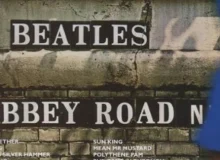
Few places are more closely associated with the Beatles than Abbey Road Studios. Originally opened in 1931, the studio became the band’s creative home throughout the 1960s. Here they recorded classics including Sgt. Pepper’s Lonely Hearts Club Band, Revolver, The White Album, and Abbey Road.
Although the studios are generally not open for public tours, visitors can view the famous exterior and the commemorative wall covered in Beatles messages from fans worldwide. The building remains an active recording studio and continues to attract major artists from around the globe. See our Ultimate Abbey Road Guide.
Address: 3 Abbey Road, St John’s Wood, London NW8 9AY
Website: Abbey Road Studios

Book your Beatles tour of Marylebone and Abbey Road HERE!
Immerse yourself in the history of the Beatles
Get a picture at the famous Abbey Road crossing
Visit film locations from “A Hard Day’s Night” and “Help”
Discover where Paul McCartney wrote the hit song “Yesterday”
Book your Beatles tour of Marylebone and Abbey Road HERE!
Immerse yourself in the history of the Beatles
Get a picture at the famous Abbey Road crossing
Visit film locations from “A Hard Day’s Night” and “Help”
Discover where Paul McCartney wrote the hit song “Yesterday”
2. Abbey Road Zebra Crossing
Just outside the studios lies perhaps the most famous pedestrian crossing in the world: Abbey Road Crossing.
On 8 August 1969, photographer Iain Macmillan captured the image of John, Paul, George and Ringo walking across the crossing for the cover of Abbey Road. The photograph has become one of the most imitated images in popular culture.
Fans from around the world visit to recreate the famous walk. Early mornings are usually the quietest time for photographs, although traffic never completely disappears. A live webcam mounted on the studio building allows Beatles fans worldwide to watch visitors recreating the iconic scene.
Address: Abbey Road, St John’s Wood, London NW8

3. Apple Corps Headquarters
The Beatles founded Apple Corps Headquarters at 3 Savile Row in 1968 as the headquarters for their growing business empire.
The building became the setting for one of the most memorable moments in rock history. On 30 January 1969, the Beatles performed an unannounced concert on the roof, their final public performance as a group. Songs including “Get Back” and “Don’t Let Me Down” echoed across central London until police intervened.
The building remains associated with the Beatles’ business interests, and is opening to the public in 2027 with seven floors of Beatles attractions.
Address: 3 Savile Row, London W1S 3PB
4. The London Palladium

The London Palladium hosted one of the Beatles’ most significant early performances on 13 October 1963.
Their appearance on the television programme Sunday Night at the London Palladium generated enormous publicity and is often cited as a key moment in the rise of Beatlemania. Thousands of screaming fans gathered outside, and newspapers across Britain began using the term “Beatlemania” shortly afterwards.
The theatre remains one of London’s premier entertainment venues and continues to host major productions and concerts.
Address: 8 Argyll Street, London W1F 7TF
Website: The London Palladium
5. The Beatles Store London

For fans seeking souvenirs and memorabilia, the The Beatles Store London is one of the city’s best Beatles-themed shopping destinations.
Located close to Baker Street tube station, the store stocks official merchandise, clothing, books, vinyl records, artwork, and gifts. It serves as a useful stop for visitors looking to take home a reminder of their Beatles in London.
The shop also displays various Beatles-themed items that make it popular even among visitors who are simply browsing.
Address: 231-233 Baker Street, London NW1 6XE
Website: The Beatles Store London
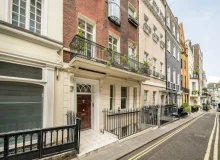
6. Paul McCartney’s Former Home
Before worldwide fame arrived, Paul McCartney lived in a house in St John’s Wood that became an important gathering place during the Beatles’ early years.

The property was owned by Paul’s family and was where many songs were discussed and developed. While not open to the public, it offers fans a glimpse into the band’s pre-superstar period.
The surrounding neighbourhood is also worth exploring because of its proximity to Abbey Road Studios and several other Beatles landmarks.
Read much more on our Visit the Beatles London Homes page.
Address: 7 Cavendish Avenue, London NW8 9JB
7. Marylebone Station

Photo by Stacey Harris
Marylebone Station appeared prominently in the Beatles’ first feature film, A Hard Day’s Night (1964).
The opening sequences of the movie feature the Beatles running from excited fans through and around the station area. The film helped establish the band’s playful public image and remains one of the finest rock-and-roll films ever made.
Although the station has modernised considerably since the 1960s, Beatles enthusiasts often visit to connect with one of the group’s most beloved cinematic moments.
Address: Melcombe Place, London NW1 6JJ
8. EMI House Site

Here’s a rewritten version of your text in a more relaxed, engaging style, at around 400 words.
EMI House, a striking seven-storey glass-fronted building overlooking Manchester Square, served as the London headquarters of EMI Records from 1960 until 1995. For Beatles fans, it holds a special place in music history. It was the home of Parlophone, the EMI label that signed the Beatles to their first recording contract on 4 June 1962, setting the group on the path to worldwide fame.
One of the building’s most famous moments came in February 1963, when photographer Angus McBean positioned himself at the bottom of the central stairwell and photographed the Beatles leaning over the second-floor railings. One of those images became the iconic cover of Please Please Me, the band’s debut LP, released just a month later. It remains one of the most recognisable album covers in popular music.
Six years later, in 1969, the Beatles returned to EMI House hoping to recreate the magic. McBean once again photographed the group from the same position for what was intended to be the cover of the proposed Get Back album. Although that album was never released in its original form, the photographs did not go to waste. The new image eventually appeared on The Beatles 1967–1970, better known as the “Blue Album”, while the original 1963 photograph was used for its companion compilation, The Beatles 1962–1966, or the “Red Album”. Together, the two covers created one of the most memorable before-and-after images in rock history.
EMI House was demolished after the company moved out in 1995, but not before Britpop stars Blur paid their own tribute by posing on the famous stairwell for a private photograph. The celebrated railings themselves escaped demolition. They were carefully removed and installed at EMI’s new offices in Brook Green, before moving again to the company’s Kensington headquarters. According to long-standing Beatles folklore, Sir Paul McCartney later acquired the railings and installed them in his recording studio in Sussex, although this has never been officially confirmed.
The famous staircase wasn’t reserved solely for the Beatles. Angus McBean had already used it in October 1961 to photograph bandleader Joe Loss, and over the years the building became a favourite location for publicity shots. The distinctive stairwell, the railings outside the entrance and the small garden in Manchester Square all featured in photographs of artists including David Bowie, the Supremes, the Seekers, the Beach Boys and Pink Floyd, making EMI House one of London’s most significant landmarks in recording history.
Address: Manchester Square, London W1U 3BN
9. The Prince of Wales Theatre

The Prince of Wales Theatre hosted the Beatles’ appearance at the Royal Variety Performance in November 1963. The event became legendary thanks to John Lennon’s famous remark before performing “Twist and Shout”:
“Those in the cheaper seats clap your hands; the rest of you, if you’ll just rattle your jewellery.”
The comment delighted the audience and demonstrated Lennon’s quick wit. The performance helped establish the Beatles as a national cultural phenomenon.
Address: Coventry Street, London W1D 6AS
Website: Prince of Wales Theatre
10. Trident Studios

Photo by ‘Picachord
Although Abbey Road is forever associated with the Beatles, some of their most important recordings were actually made elsewhere. One of the most significant alternatives was Trident Studios in Soho, which became one of London’s most influential recording studios after opening in 1968.
The studio’s biggest attraction was its cutting-edge eight-track recording equipment. At a time when even Abbey Road was still using four-track machines, Trident offered artists far greater flexibility in the studio. It quickly became the place to record, attracting many of the biggest names in rock and pop.
The list of classic albums recorded here is extraordinary. Elton John recorded Your Song as well as much of Tumbleweed Connection and Madman Across the Water. David Bowie used Trident for Hunky Dory, Aladdin Sane and The Rise and Fall of Ziggy Stardust and the Spiders from Mars. Carly Simon recorded No Secrets, Lou Reed made Transformer—including the timeless Walk on the Wild Side—and Queen became almost permanent residents, recording their first four albums here, including the landmark A Night at the Opera. That close relationship was hardly surprising, as Trident’s owners, brothers Norman and Barry Sheffield, also managed the band during their early years.
Trident was famous for more than just its recording technology. The studio housed a magnificent hand-built Bechstein grand piano that was already around a century old. Often described as one of the finest rock-and-roll pianos ever recorded, it can be heard on legendary tracks including Elton John’s Your Song, Queen’s Bohemian Rhapsody and the Beatles’ own Hey Jude.
The Beatles first came to Trident while working on what became The White Album. In addition to recording the classic single Hey Jude, they completed several album tracks here, including Dear Prudence, Honey Pie, Savoy Truffle and Martha My Dear. The studio remained popular with the individual Beatles after the band’s later years. Ringo Starr recorded material for his album Sentimental Journey, while George Harrison used Trident for parts of his acclaimed solo masterpiece All Things Must Pass.
Although the original recording studio closed in 1981, the building continues to operate as Trident Sound Studios, specialising in audio production for television, film and voice-over work. Visitors can still find the site tucked away in a narrow Soho side street. A blue plaque, unveiled on 15 June 2017, marks its importance in British music history. Interestingly, it honours David Bowie’s work at the studio rather than the Beatles, despite the remarkable recordings they created within its walls.
Address: 17 St Anne’s Court, London W1F 0BJ
Planning Your Beatles Tour
Many of these locations are concentrated in central London and can be visited over one or two days. A popular route begins at Baker Street and St John’s Wood, taking in Abbey Road Studios, the zebra crossing, Paul McCartney’s former home, and the Beatles Store. Visitors can then continue into the West End to see Savile Row, the London Palladium, the Prince of Wales Theatre, and the EMI House site.
Most locations are easily reached using the London Underground. St John’s Wood station on the Jubilee Line is ideal for Abbey Road, while Green Park, Oxford Circus, and Piccadilly Circus stations provide convenient access to many central London Beatles landmarks.
Whether you are a lifelong fan or simply curious about the group’s extraordinary legacy, these sites offer a fascinating journey through the London chapter of the Beatles story.
Best London Travel Guides


RECENT POSTS